Thursday, August 23, 2012

Gladius

Gladius
Overall: 3.8
Gameplay: 4.0
Story: 3.4
Customization: 3.2

             Gladius, the baby of Lucasarts and Activision, is one of the more modern games I've reviewed, but I still consider it to be a glanced over gem of its era. It was released for the PS3, Xbox and Gamecube and received amazing ratings and reviews, but yet it never quite caught on with the general public. I could speculate as to why that was the case, but I won't. The important thing for you to know is that a copy of this gem will only run you about 9 bucks on Amazon, so I'd really suggest you'd take a shot on it. This game is considered a "Tactical Role Playing Video game", but as many of you already know, I argue that this game could be considered one of the predecessors to the arena RTS genre. The game is a turn based strategy game, where you and your gladiator school go into different arenas to gain enough prestige to be recognized all around the ancient world as champions. There's two things that make this game so good. A well placed, unstructured storyline and strategy mechanics that reward skill and present a challenge. Let's start with my forte, story.
         Now, you might be looking at that 3.4 and wonder why I consider the story of Gladius to be a positive aspect of the game. That's because even though Gladius' story isn't amazing, it does its job. In the beginning of the game, the player gets to pick two different starting characters (one is more difficult to start out with than the other). The characters essentially correspond with two different story lines. The easier difficulty is that of Ursula and her brother Urlan. They are the prince and princess of the Barbarian nation, that just finished establishing peace with the imperial nation (essentially a Rome look alike) just to the west of them. Apparently Ursula is a part of a prophecy where she must fight an evil force to be determined later. That very evil force is what apparently caused both of the countries to stop fighting in the first place. This sets up the preoccupation of "what does one have to do for the sake of peace". While, Ursula and Urlan fight through their country, they eventually get good enough to go into the imperial nation, where they meet Valens, the character who represents the second story line and also the advance difficulty level. If a player starts with Valens they will be given a back story of a dead father who apparently has left Valens the remnants of his amazing school (a school which conveniently has little to no good fighters). So he saddles up with his buddy Ludo and they continue to do the same thing Ursula and Urlan are trying to do in the barbarian nation. Well, as time goes by, depending on what storyline you choose, one of the schools will absorb the other in a show of good faith (and primarily because they cast the other main character as a failure) and the main character you didn't choose will join your crew. This is symbolically meaningful because only through the combined efforts of the Imperial school of Valens and the Barbarian school of Ursula can the characters find their way to winning the high tournament. Oh by the way, Ludo abandons you guys at some point and joins an evil legion of people that are somehow connected to the aforementioned prophecy, but ignore that, symbolism!
        But, that's just the storyline. The great thing about Gladius' narrative is the little nuggets of story you can get by just going the extra mile in the game (and with a good guide). As you recruit more people into your school, there will be certain gladiators that can be acquired through special matches and outside encounters. These matches tend to be high risk  and have higher difficulty, but as a result you get to come across some interesting gladiator. From a yeti who doesn't want to be a gladiator to an undead summoner that will give you relationship advice later in the game, these characters, while being completely pointless in the long run of the story, have meaning because they're your comrades! You chose them specifically and you guys win and lose together. There are also some other main characters you get later, but I ignored most of them because while they were cool, they were actually pretty useless in the arena. I'm unsure if I've explored every single gladiator in the game, but you feel as if each one has its own story. And you end up remembering the name of even the useless javelin thrower you purchased as a level one, that you were forced to let go because you needed to get an archer. These are some of the intangibles great games need to be great.
     Time to switch gears, game mechanics in Gladius rewards skill as most attacks are done through a swing meter. Also, tactical positioning is something a player gets better at with experience. One feels they are learning the art of gladiator battles while playing the game and that feeling can only be described as bad ass. There's also multiple ways of going about battles, but each stage and gladiator configuration makes it so that there are optimal strategies one can take. As you get better in the game, you recognize optimal strategies quicker and begin to feel accomplished at your level of mastery. Then after you've mastered optimal game mechanics skill (i.e. getting good at swing meters) and optimal strategy, you feel like a god in the arena, quickly infiltrating enemy positions and taking advantage of weaknesses to the fullest extent. Games like Gladius are addicting because they are fun to play and require skill. I've easily dropped 8 hours on Gladius in a day, just powering through entire arenas just to get to the next land.
    However, with all games there is criticism and Gladius definitely has one huge flaw. There is drag and a lot of it. At a certain point gameplay will become repetitive. That's because by the time you've reached your fourth land you've pretty much acquired all the gladiators you'll ever need to be successful. Also, all that tactical prowess that was needed in previous territories diminishes as you'll find your characters have essentially unlimited range with unblockable attacks, making any challenge disappear. Even the tough battles become more trivial than anything because the tough battles don't really reap the reward of a new gladiator, so any player who doesn't care about full completion just decides to skip them. It isn't until you reach the final tournament where you'll face truly formidable foes again, but by then it's too late. Most players would have either checked out or started a new save.
     Gladius is a good game. It's actually really good. This is definitely worth any avid video gamer's time. It's super cheap and has plenty of playing hours in it so you will get your bang for your buck. I wish all of you good fortune in the arena. 

Hey, you haven't been posting awhile!

              I'm unsure how many people read this blog (I secretly don't trust the statistics given to me by google), but for anyone who is a loyal follower, then the question of "what the hell happened" must have been raised in the past few days. Well, I kind of have a good excuse for my sudden lack of material (though I recognize that I did promise some reviews of games). First, I'm back at University of Michigan and that always requires me to reorganize my obligations and well, reorganizing obligations takes time. Especially since classes haven't started yet so I've been more in a housing limbo, where I know I have work and other things coming up, but I don't have the means to begin working on them all right now (or sometimes I don't have the drive :p). But alas, simply returning to college wouldn't be enough to derail my video game reviewing efforts. What's different this time is the fact that I've joined the Res Staff at Mojo as an RA. For those of you unfamiliar with the process, being an RA during move in means you are placed on a schedule that usually mirrors a 9-5 job. I've also come down with the sniffles, making my free time being used for sleep rather than video game playing. Also, I wasn't even near my laptop for 2 days (housing puts us on a retreat), taking away crucial hours that I could have been using finishing Terranigma. But at this point it just seems like I'm making up excuses. So I want to make it clear. I will be continuing with the blog throughout the year, however the amount of posts completed will be significantly reduced. To make up for this, I'm going to try to spend more time on a particular game and also begin making commentary on hot button issues in the video game industry. I'm also considering making a video game appreciation club here at Michigan, which will further fuel the flames of my passion for this blog. I can't say enough about how grateful I am, that at least some people are reading this stuff. Even if you don't agree, it means a lot that my opinion is being considered in the larger web of other opinions concerning the video game community. I hope those of you who read this blog avidly (though I know that's probably very few people), will continue to support it regardless of the reduction in material. Thanks!

                                                                                           Raymond Arroyo

Wednesday, August 15, 2012

Why I really hate Borderlands Part two

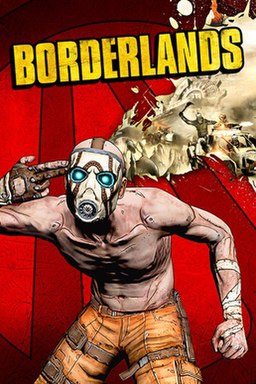
       So I was reading through (again)  this near novel review of Borderlands http://steve-yegge.blogspot.com/ and I couldn't help but cringe. The reviewer (who isn't the author of the blog) is an uppity writer who assumes she has it all figured out because she has a clear vast knowledge of video games and how they work. Now I'm going to be frank. This reviewer disgusts me. She talks about Borderlands as if it's the second coming, and attests its true depth and magnificence to, drumroll please, how it perpetuates addiction. This is exactly what we shouldn't be doing in the industry. Using Token economies and reward schedules to enrapture people in a never ending cycle of achievements is wrong when it's a means to an end (where the end and the mean are the exact same thing). But be assured, she believes it's a good game, so she has noted other aspects as to why that's the case. I'm here to tell you that all of the other aspects are wrong. I'm going to explain why they're all wrong. Let's begin.

The dialogue is horrible

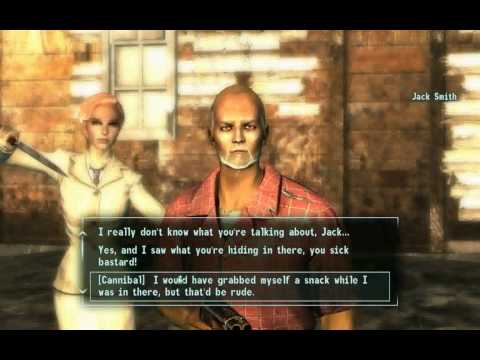
      The dialogue is horrible. Not because it's poorly written. But because there isn't actually any value to be gained from listening to it. It doesn't work to establish any sort of setting or characters. Every single person you come into contact with (aside from a few like that annoying claptrap machine) is basically a stepping stone for you to grind more. There is no "aha moment" where you find yourself being drawn to a character. In fact, I challenge people to tell me a character in the game, whose actions and dialogue make for a very convincing and unique character. Why actions you might ask? Because talk is cheap. Words aren't enough to convince people of real characters. Let's take Fallout 3 for example (a game that mirrors that disgusting setting of borderlands, while being artistically adept). Remember that weird town at the bottom of the map called Andale?  When you go there you engage in a lot of well written, zany dialogue. All of it alludes to how the residents of the town might be cannibals. You know what's the icing on that cake? THE FACT THAT THEY ARE ACTUALLY FUCKING CANNIBALS. When you walk into this
Are those actual skeletons?
And then you're presented with these answer choices (dialogue): 
I don't like it when people shove kitchen knives in my face
You feel something because the game is making characters real by reinforcing what they say with their actions. Oh by the way, he shoots you if you choose the other two answer choices, just further reinforcing that cannibals are deranged. So no, I didn't chuckle in Borderlands, nor did I even bother to care about the quests I did. That's because it didn't mean anything. And don't go arguing, "if you read the dialogue by itself, you'd really find it witty". Who else but Forensics teams, sit around all day reading dialogue that don't weave together a coherent plot (no offence to any forensics people reading this blog). No one. It's boring. You wouldn't let someone sell you a book that removes all the text but the dialogue, would you? If you answered yes, then you're right, borderlands has witty dialogue and you should probably stop reading now. 

It isn't fun
              Fun is as subjective as it gets and depending on what you find fun is going to determine if you think I'm a genius or an idiot. Luckily, you can forgo reading my opinion here and just look to my post on Realm of the Mad God (http://retrospeccced.blogspot.com/2012/08/realm-of-mad-god.html). It's quite brief and if you take 5 seconds to play the game, for free, with no download or significant lag (http://www.realmofthemadgod.com/), then you can determine if we have similar outlooks on what's "fun". If you find Realm of the Mad God pure fun (not saying it's amazing, just that it's fun), then you're in luck, I agree. If you think it's boring because it doesn't have amazing graphics and more options for loot, then we do not see eye to eye on fun. 
             You see my personal philosophy on "fun" in video games is simple. It needs to come from the game play (answer choices aren't fun) and it needs to be creative. If your fun is game play driven and creative, then chances are I'll find your game fun. Now I don't hold a check list while playing a game, waiting for the moment creativity takes over. I just know when I'm having fun that it's fun. That was just a quick analysis of what I subconsciously use as a criterion. And don't get me wrong, your game play doesn't need to be groundbreaking to get my creativity pass. I find Mario Tennis to be creative because bullet bills get shot at you while you serve (exaggeration, this doesn't actually happen). In fact, I just don't want something that get's bland and boring quickly. Oh hey Borderlands, I knew I'd find you somewhere in this section. 
      Before I disagree with her opinion on what constitutes as fun, I'm going to explain why Borderlands isn't fun to begin with. First, you do essentially the same thing in Borderlands. It's the same collection of quests we all know and love from any good MMORPG. Collect x amount of this. Kill x amount of this. Kill guy x. This will be cycled over and over and over, till you instinctively know how the NPC is going to cleverly word the same basic task. And to top it all off, while you're doing the same thing you can also, (drumroll[ wow two drumrolls in one post]), kill the same thing. Yes, the enemies you kill in borderlands will for the most part be exactly the same all throughout each section. When you face new enemies it's a rarity that becomes old almost immediately because chances are you'll be given several other missions to kill those very same rarities for the billionth time. How this doesn't scream out "boring repetition" is beyond me. In fact, the very action is basically the embodiment of repetition. You do the exact same thing. It isn't even masked well, like the way WoW does it (not to say WoW doesn't turn into repetitive mush as well). 
    Also,there isn't any skill being displayed here. For a shooter, it's pretty manila and I found myself early on being able to plow through enemies, never having to work for anything. New abilities and new weapons  never intrigued me because I found that a simple rinse, wash, repeat, can get me through dealing with enemy baddies. I mean sure there's always that nuke ability you get that makes you go gun crazy for about 5 minutes, but then you fall right back into that same brain numbing groove of killing monsters. There are no points for creativity in this game. It encourages rote killing an that's exactly what you need to do to maximize your efficiency in the game. And since the game is all grind, efficiency is the only thing you should be striving for. 
   
Acknowledge counter examples
         Now is Borderlands completely devoid of fun? Well not exactly. It is, however, completely devoid of long term fun. For example, I admit that jumping in low gravity is cool, but that gets old after an hour. And vehicles are fun too, but that also gets old after an hour because it takes no skill to use them. Abilities, as I mentioned before, can also be fun, but after mastering them, there is no more fun to be derived because skill isn't a factor. When elements of fun are just shiny objects being tossed at the player instead of being a shabby, yet reliable, set of building blocks, then you have the recipe for a short lived amount of fun in a game. 

If you don't agree with my notion of fun, then please don't tell me you agree with her's
      When the author begins her fun tirade, she starts with an example of what isn't fun (basically she cites a shooter that had stunning graphics, but flat game play, that "unsuccessfully" copied Borderlands). This is what she says "The fun it [ Rage] offers is ephemeral: typical fire-and-forget mediocre-shooter fun." Funny, that sounds exactly like how I described Borderlands' fun, short lived and typical. She doesn't ever explain why Borderlands is any different. Instead she decides if she's going to hate on one game, might as well raise the ante by hating on an entire genre. The genre she decides to toss her general unsubstantiated criticism towards is the RPG. She claims that too many RPGs have become too realistic. A fair argument, that she again furthers by an example that doesn't fit the norm. She cites Fallout 3 (oh hey, what a coincidence) as an example of a good RPG that isn't too realistic. She then ponders the fantasy of a Fallout and Borderlands mash up (sounds more like a nightmare). Not once does she ever explain why Borderlands itself is actually fun, but instead leaves it up to the reader to trust that Boderlands is the exact antithesis of the two negative aspects she highlighted.
     But don't worry, she talks about the intangibles that make the game so memorable. Now we're both in agreement here. Intangibles can take a bland game and turn it into an amazing game. But what she cites as intangibles is laughable at best. First, she talks about how awesome the design team was to come up with the idea of making "angry midgets". She even comes up with a mock design team convo that paints them as the cool, risk taking nerds that are into all the same stock weird stuff that make games so gooey at the center.


This is her mock convo:

"Hey, wouldn't it be cool if we had, like, angry midgets?"


"Uh, don't they prefer to be called Little Dudes?"


"Not on Pandora. On Pandora they prefer to be called aaaaAAarguhgh as they shoot your ass with a shotgun so big that it throws them onto their backs." 

"Woah! There's no *possible* way Legal will let it through, but it does sound fun! Let's go with it for now."
She gained that kind of impression from this enemy. 
Isn't he adorable?
And if every shred of information I gave you so far was the whole story, then maybe she'd have a case. Too bad this is also an enemy they debut right from the beginning.
Hey, you're just like the other guy, but taller!
Look familiar? It should because they're essentially the SAME FUCKING GUY. Let me give you my impression of the development team

Idiot1: Hey, our deadline is almost up and we've only come up with one enemy

Idiot2: Fuck, I don't want to miss another deadline 

Idiot 1: Yea man, I was just getting good at this whole "having a job thing" 

Idiot 3: Hey! Why don't we just take the first guy we made, make him shorter, and change his eyeballs to a different color. 

Idiot 1 and 2: That's perhaps the stupidest thing I've ever heard, but we're pretty much out of options, so...

[end scene]

If you find the notion of shooting an angry midget truly inventive and uniquely funny, then congratulations, you have the humor of a four year old, and even that might be an overestimation. 

Conclusion: Stop perpetuating addiction as a goal to aspire to
          That pretty much entails every reason she gave as to why Borderlands is fun. From there she gushes on for several pages on why it's such an addicting game. She explains with precision and scarily concise attention to detail what aspects of the game serve to push along the behavioral psych hamster wheel that is "the game". She even puts in bold a microcosm of what could be construed as her own philosophy when it comes to the purpose of games. She writes "fun isn't enough to create addiction". And she's right. Fun is a liberating experience that can cause a temporary indulgence that might be misconstrued as addiction. Addiction is constricting and sucks the life out of someone, replacing it with its own rules. Fun is eye opening, allowing someone to transcend the boundaries of their world for a few moments, creating a necessary break from reality, while giving a person ammo to combat with it. Fun is vitality. Addiction is degrading. And while I do think some of the addictive nature of video games is unavoidable, the day we start measuring games based on how mind numbingly addicting they can be, is the day video games cease to be works of art or even forms of entertainment. Instead they become drugs, that take advantage of how we think, slowly enslaving us into believing in their own system for self worth. 

Tuesday, August 14, 2012

The Battle Arena RTS: A new sub genre?

              Well this has been coming a long way in the making. What spurred this post was when my friend (we'll call him Vik) first tried to convince me to play League of Legends (LoL) (successfully as you may have deduced from previous posts). In the process of him trying to convince me to play,I badgered him to tell me what kind of genre the game was. But he couldn't. He asked if I played Defense of the Ancients (DoTA) and I hadn't, so he basically told me that there aren't that many point of references. He likened it to a RTS, but argued that it's probably a new genre. At first I was skeptical and when I began playing I quickly wrote it off as an RTS, but now, 17 levels later and fluency in Veigar and Pantheon, I'm inclined to partially agree. This opens up the interesting question of what establishes a new genre in the video game industry.
             The title probably gives away that I don't consider LoL as one of the trailblazers of a new genre. But I do think it's a good example of how sub genres are discovered. I say discovered now, but if you had asked me before I wrote this post I probably would have said "created". That's because I thought nothing like LoL ever existed. Its battle arena like elements were a new twist on PVP, that was completely untapped by the MMORTS community. Well I was partially wrong. The battle arena concept certainly wasn't adopted by the RTS community (however a good rts predecessor called Gladius could be a cheap counter example). But it was adopted heavily by the MMO RPG community. PVP essentially relied on this battle arena concept in World of Warcraft (not all PVP, some). It seems more likely that those who created the mod for DoTA were merely taking the battle arena that was so fun in World of Warcraft and implanted RTS elements into it. Now don't misconstrue what I'm saying. The game design DoTA left behind is basically the blueprint all Battle Arena RTS games are using, for now. But at any moment designers could decide to stir up some of the trademark elements. Imagine an arena game where you fight AI, but in clear sight is the opposing team whose performance, in conjunction with your own, will determine if you live or die. It's the concept of the "Battle Arena" where one faces an opposition with one's own livelihood on the line, that makes a game gain access to this new genre, not the blueprint left by DoTA.
           But let's get back to our initial question of "what establishes a new genre in the video game industry". Most of the time we categorize video games by element. We have FPS, RPG, platformers and so on. But sub categories tend to be given according to style. Horror games for example, tend to be shooters, but no one describes them (at least not off the cuff) as FPS horror games. You usually denote them as horror games. It's interesting that video games are classified by elements first and style second. Perhaps this provides insight as to what's important to gamers. We need to know if the mechanics of a game fit in with our playing style. Some people can't play FPS titles for the life of them. Therefore a horror game is pretty pointless when you can't play past the first level. I think other mediums follow this logic as well, especially when it comes to Art (think pointillism vs realism). This doesn't follow much with writing, because most writing is accessible at a basic level, and the same could be said for most movies. But the reason I bring this up is because people in the industry claim that the way we categorize games (by element) is weird and doesn't make much sense. I disagree. Gamers need to know if they can play a game before they get into the stylistic choice it brings to the table.
         Well this was a huge mess of ideas. I hope if you got to this point of the post, that you take away that LoL indeed is a new sub genre. It's unique because of its style, not the elements it infuses. Also, this review reminded me how great of a game Gladius was, so expect a review for that soon. I'm almost done with Terranigma as well, so don't worry I haven't forgotten about that (yes, I actually play the games I say I'm playing on the blog). If you have any musings, insights, or commentary on how genres work in video games or if you disagree with my opinion on where LoL stands, comment! Please! I hate my views. I get like 40 views a post, but I'd trade all of them for one comment. So please tell me your opinion. 

Monday, August 13, 2012

The Subconscious Creation Story

               After playing through several SNES games this summer, I've found a very interesting preoccupation in a few of them. Specifically the games Terranigma, E.V.O and Illusion of Gaia. All three games have a running preoccupation concerning the fixing or rebuilding of the world. Two of them use Gaia, who for those of you who don't know their Greek mythology, was a greek Goddess (well not a Goddess, a "Titan") that predated Zeus as the ruler of all life. In fact Gaia was thought to be the mother of all life. It's interesting that several games, all of them being RPGs (illusion of Gaia is a fence sitter), would take this concept of rebuilding the world and make it the central theme of their game. I believe that developers gravitated towards this preoccupation because the Super Nintendo was the entry way into the Golden Age of video games, especially when it came to RPGs. Developers realized they could tell compelling stories through games and what better story to tell than the story of how everything came to be. It is after all a story that all mediums of art have had their hands in at least once. I see these games more as a subconscious rite of passage these developers were taking for the sake of legitimizing their art. And when you play through these games it's clear that the choice of theming wasn't done for the sake of the frivolity of the game, but instead was a conscious effort to provoke deep thoughts about "where we came from", "why are we here", "what is the role of the individual in this world". The list goes on and on.
            I'm not putting this forth as the sole reason these games were made. I'm just pointing out something that I think is pretty cool and further proves that video games are a medium of art. If any of you know of other SNES games or any game really, that touches on this theme of "rebuilding the world" or "fixing the world", usually with a strong connection to divinity and ancient ties, then please leave a comment. I've been a bit lonely with my own thoughts lately :P. 

Realm of the Mad God

Overall: 3.5
Gameplay: 3.8
Addictiveness: 3.6
Drag: 2.6 
Fun: 3.7

              Extra Credits has given me another 8-bit wonder to explore and I'm happy to say that this title delivers on all the hype. Realm of the Mad God is a free to play co-op shooter MMO that's just plain fun. You know, the kind of fun we used to play video games for. I'm talking Mario Kart fun. I'm talking Kirby Airide fun. I'm talking about busting out the N-64 to play Goldeneye with your uncles fun. Realm of the Mad God keeps it simple. They toss your pre-made character into the realm and you begin your click and shoot glory, fighting along side several other players who would like nothing else but to save your ass. That's because in this world all human players are friendlies and all AI are the enemy. You sprawl your way around large terrains, constantly switching between soloing and teaming up so that you may finish the randomly generated quests. The quests are simple. Kill this guy. Usually this guy is surrounded by several other non important guys, who also want to kill you. If you kill all of them, non important and this guy alike, then you are rewarded with xp and drops. But be quick about sorting through your spoils because chances are the next this guy is just around the corner waiting to kill you. 
             What keeps you hooked is the vast expanse of classes that you can unlock. You're started out with a mage, but after getting the mage to a certain level you can choose to destroy your character to access the new class you just gained (a priest). This level up, unlock, cycle makes the game incredibly addicting, except for the fact that it has drag. When I say drag (which is by no means a term used in the literature, I'm sure somewhere in behavioral psyche papers about video games there is a better term) I mean a kind of wearing on you the game accomplishes by either having a predictable reward schedule or by being plain repetitive. Realm of the Mad god is plagued by both aspects. After playing through one realm, you've essentially played through them all. Environments certainly change and foes do become more challenging, but the core gameplay is still the same weave, click and shoot that you've been doing since your days as a mage. Also, the reward schedule, which comes to you in the form of class unlocks and leveling up, is all easily calculated and predictable. Especially for the class unlocks, where achieving a certain level is the tangible threshold the gamer must meet to unlock a class. Since the threshold is so tangible, one finds themselves weighing the playing time against other options (like watching some tv). I'm not saying that classes should be unlocked randomly, I'm merely pointing out that the predictable reward schedule set by class unlocks proves to be detrimental to the long term experience of the gamer.
         But, some games aren't meant to be played endlessly. Perhaps the creators of the Realm of the Mad God didn't want their players to feel enslaved to the game. Sure this goes against all the MMO logic we've been fed by all the big names in the MMO business, but who cares. Sometimes I prefer having a game that doesn't compel me to play for hours, but can still captivate my attention for 45 minutes. 
        Play this game. It's free. You don't need to download anything. Just google Realm of the Mad God. Actually just click this link http://www.realmofthemadgod.com/ and begin having fun. A small warning, don't play a shooter on a computer without a mouse. 
                

Thursday, August 9, 2012

Asura's Wrath

Overall: 2.2
Gameplay: 1
Story: 3
Characters: 2
Boredom: 5


              Asura's Wrath is an episodic button masher that is part God of War Clone, part anime series and whole infinite boredom. This game tells the tale of Asura, who is a brash general/demi god that just recently subdued the evil spirit of the world named Vlitra (with the help of his daughter, the priestess). Well since there needs to be something that drives the plot, Asura is framed for killing the emperor by the head commander and is forced to watch his wife murdered and his daughter taken away from him. Then he is killed, sent to the depths of Nakara where he does god knows what. 12000 years later (I think that's how long) he comes back with a vengeance or should I say "wrath". Oh yea, they use that annoying lost memory trick so they can start you right in the action without giving you any more background information. What they don't realize is that there really is no need for this because the background information they do slowly feed you is completely inconsequential to the overall plot. Well... if that hasn't convinced you to not buy this game, let me try to convince you further.

Gameplay

This game has been called a mish mash of several types of games. This is true in a technical sense. The game is part button masher, part rail gunner and part quick time events. Let's talk about the last one. The entire game is composed of quick time events. You spend your entire time working your way from one quick time event to another. Each quick time event allows you to beat the boss or progress the plot. So in essence, you don't actually beat anything. Also if you haven't gotten tired of quick time events the game allows you to do several in-battle quick time events. This isn't a near death sort of thing, but instead just a "I dropped you on the floor so I want to do some damage kind of thing". In fact, some enemies will fall on the floor for you, waiting for you to initiate the quick time event. If this hasn't completely deterred you, then let me mention the fact that the rail shooting sequences are completely boring and repetitive. When was the last time you were like "man I really miss those old rail gun games that were essentially impossible to win". Never? Oh yea that's probably because rail gun sequences get old. It doesn't help that each episode is the same fucking thing. Intro> kill pointless Gohma grunts> Gohma boss> kill pointless Deus grunts> rail gun sequence where you deter projectiles from a static position> rail gun sequence where you are moving> more grunts> deity fight. Yep. I played the game on easy because I had no intention of wasting more time than necessary. It took me two days to beat the episodes on the disc. I don't care how easy is easy, it shouldn't take you two days to beat a game.
     To be fair, there is some cool stuff about gameplay, when you think of it metaphorically. The issue is when something isn't fun I find it hard to care how metaphorically moving it is. So let me drop the one cool nugget. There are no health bars for enemies. Even for bosses. In fact, the way you trigger the aforementioned plot progressing quick time events is by filling a bar up. That bar seems to represent "Asura's Wrath". This means you are literally beating the game by means of Asura's wrath. That's pretty cool. Too bad all that other stuff I said is still true.

Story
        Apparently this game is based on some Hindu mythology and Japanese folklore. Now I don't like insulting Japanese Folklore, simply because Miyazaki has me believing some of it, but if this is an actual story then I may have lost hope. So I decided to do some research of my own. And after thoroughly looking at wikipedia for 5 minutes, I found this link http://en.wikipedia.org/wiki/Asura_(Buddhism) and from the look of it they simply took the generic character traits from the ancient myths and ascribed it to this character. I'm curious if the story even has any root in actual Hindu mythology. But the important thing is Japanese folklore seems to be inconsequential.
     Now let's get to what could pathetically be called, the plot. I told you that Asura is mad because his wife is dead and his daughter is being used as a tool of war, but then some random spider eggs him out of Naraka (hell) and back to the real world so he can claim vengeance. The spider is pretty snarky and one wonders why Asura didn't kill him after the first time he goads you with the death of your daughter, but Asura seems content to ignore him and run up out of hell yelling. When you get back to earth you get a flashback explaining how to fight (as if button mashing needs to be explained), and then you need to save some innoccents from the Gohma (they're the evil minions of Vlitra). Then one of the old commanders, now revered as gods, comes in one of his ships and tries to kill you for being a traitor (by the way there's seven of them). You make quick work of him, but not after he completely wrecks your shit in a cut scene. This leaves you incredibly vulnerable for your old brother in law, who is also conveniently one of the old commanders/gods, to come over and finish you off. But that annoying spider is there again to wake you up and taunt you, compelling you to get out of Naraka and start the entire cycle again. This is repeated until you beat the big boss in the end. Your brother in law will have a change of heart at the end. Funny, you'd think if you spent 12000 years working on something it'd take more than a few days of reflection to cause you to jump ship. One of the commanders isn't even dealt with. She's completely ignored and for some reason doesn't intervene in the final battle. Also, Viltra is apparently the soul of the Earth and is mad at you for no clear reason. This is never explained, just put out there as fact.
   The dialogue is horrible. I'll give you near one word encapsulations of every characters' dialogue (and the characters themselves).

Asura: ARRRRGH
Wyzen: Traitor
Yasha: The cause
Yasha after the cause: Justice
Olga: Whatever's necessary
Kalrow: I'm smart
Augus: Fight!
That other guy: beauty
Deus: the cause
Spider: your daughter is dead

I wish I could be making it up.


God of War Clone
            This game has actually been given popular reviews for being original. I don't understand how people can't see the God of war influences in this. A list is in order

1. Daughter issues
2. Return from Hell
3. Killing of all the Gods
4. Awkward Sexual undertone minigame
5. Angry Kratos, Angry Asura
6. Quick time event boss killings
7.  Loss of wife
8. Going back to Hell again
9. flash back to random girl who resembles your daughter, but isn't

I'm sure there is more, I was just too lazy to get through them all.

So there you have it. This isn't a good game. Most of the game is cutscenes anyways so you can just watch all the cutsences on youtube and get the exact same experience of playing. These guys are still releasing episodes for money. I don't know who is stupid enough to actually buy that crap. I'm certainly not.